Dearest Wanna Be,
Wine is for everyone. Don’t let anyone ever tell you differently. The important thing is that you enjoy it.
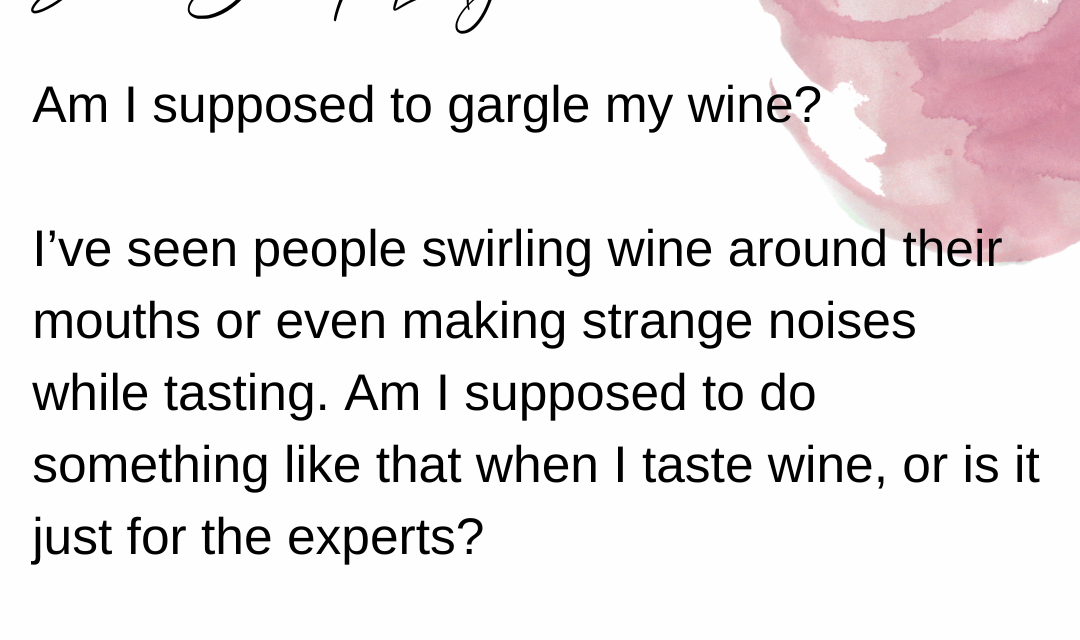
But don’t treat your wine like mouthwash, it doesn’t deserve that. But in all seriousness, the swirling, slurping, and even occasional gargling noise can seem a little strange at first, Especially when you are in a tasting environment where people are spitting their wine out. Or drawing air while they swirl. But there’s actually some solid science behind why. What’s happening here has everything to do with how our olfactory system works—how we use our sense of smell to “taste” wine.
When people swirl wine in their glass, they’re releasing its aromas. This is important because smell plays a huge role in how we perceive flavors. When you swirl the wine, you’re helping it interact with oxygen, which enhances those aromas and gets them ready for your nose. This is the same reason we decant, and the same reason a wine glass abandoned overnight will smell sour. There is a perfect amount of oxygen that activates all the aromas and there can be too much.
Here’s the cool part: your sense of smell doesn’t stop working once you take a sip. In fact, when wine is in your mouth, you’re still “smelling” it, thanks to something called retro-nasal olfaction. This happens when aromas travel up the back of your throat and into your nasal cavity. It’s the same way you “taste” food more fully when you chew with your mouth closed and breathe out through your nose. Don’t believe me? Think about when you have a head cold, and your so congested and nothing as good as it normally does. Because it really doesn’t! The realtor-nasal olfaction isn’t working, so you aren’t getting all the flavors/smells from your food. So, when you’re swirling the wine around in your mouth or taking in a little air while sipping (that slurping sound), you’re allowing those aromas to reach your olfactory sensors more effectively. This amplifies the flavor experience, letting you perceive all the nuanced notes that would otherwise be missed.
Now, when it comes to actual tasting, the tongue itself is somewhat limited. Your taste buds can only pick up five basic tastes: sweet, salty, sour, bitter, and umami (the savory, meaty taste). But wine is so much more than just those basic flavors! That’s where your sense of smell steps in to help. While your tongue can tell you that a wine is sweet or acidic, it’s your nose that picks up the intricate details—the cherry, vanilla, earthiness, or even subtle hints of spice. Believe it or not, the average human nose can detect over a million different smells, compared to just the five tastes your tongue can sense. This is why smell is so important. Why wine drinkers smell wines before they taste them. The aromas you detect in the wine are a huge part of its overall flavor.
So, why do some people swish wine around in their mouths? It’s all about getting the most out of those aromas and flavors. By moving the wine around in your mouth, you’re allowing it to hit different parts of your palate and engage your olfactory system, giving you a more complete sensory experience. This process helps you detect the wine’s acidity, tannins, and all flavors.
That said, the noisy taster is annoying. It’s not polite in most spaces to slurp your soup or your wine. Swirl your glass and take smaller sips, allowing the wine to coat your tongue. You don’t need to throw your head back go all Buddy from the movie Elf. A simple swirl in your mouth or a gentle sip is more than enough to bring out those extra aromas and flavors. The important thing is to enjoy the wine because that was the reason you chose to drink it. So you don’t need to gargle, but you can use a more purposeful sip to more fully enjoy your wine.
Cheers,