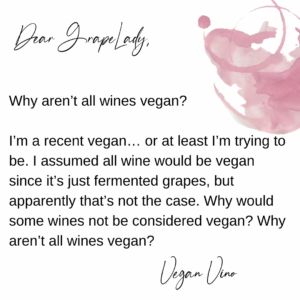
Dear Vegan Drinker,
On the surface it makes no sense! I know. Wine is made from grapes & yeast, so shouldn’t all wine be vegan. Unless we classify yeast as an animal? (The world does not by the way, or else you would need to give up bread!)
The government isn’t what regulates ‘vegan’ products either, it is the Vegan Action Organization- a company. Being certified vegan is much less expensive than being certified organic which is why you may see a rise in the number of products bearing the trademark symbol. According to the Vegan Action Organization who regulates vegan labeling:
“Products approved to carry the Certified Vegan logo must not contain ingredients of meat, fish, fowl, animal by-products (including silk or dyes from insects), eggs or egg products, milk or milk products, honey or honey bee products, or be clarified or finished with any animal products.”
This is where the issue is. In the winemaking process called ‘fining’ some animal products may be used. Fining is a clarification process that helps remove unwanted particles like proteins, yeast, and phenolic compounds from the wine, making it clearer and improving its taste and texture. Color and tannin are proteins, as are the grape skins. If the wine is not put through the fining process you end up with a wine with sediment. If you have ever poured a glass of wine and ended up with coffee ground like debris at the bottom of your glass and the wine was young- that wine may not have been fined.
Common animal-based fining agents include:
- Egg whites (albumin) – often used in red wines to soften tannins.
- Gelatin – derived from animal bones and tissues, used for clarification.
- Isinglass – made from fish bladders, used to remove impurities.
- Casein – a milk protein used in white wines to remove excessive phenols.
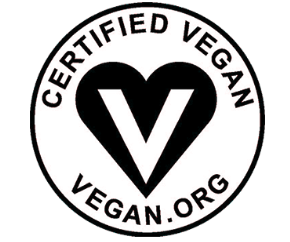
While these agents don’t remain in the final product, the use of animal products in the process means the wine wouldn’t be considered vegan because the animal products are used. However, there are vegan alternatives such as bentonite clay, activated charcoal, or pea protein that can be used for fining, and many winemakers now label their wines as “vegan-friendly” when these alternatives are used. Now “vegan-friendly” isn’t a trademarked term, unlike ‘Certified Vegan.’ The below image indicates that the producer has gone through the certification process with the Vegan Action Organization.
Many wineries won’t have addressed vegan practices on their label. You can reach out to them, often they are ‘vegan friendly’ but just don’t want to clutter up their label with more text.
You can decide how strict your vegan principles are. Trying to cut out every single product that utilizes animal products will leave you with very few options in this world. But you will have a few wines who have paid for certification.
cheers,