
In the early years of the 1940’s and 1950’s, Aoudad sheep were first brought into areas of Texas with the prospect of future income for Texas landowners. Since that time, Aoudad (in free ranging areas) have propagated extremely well and have continued to provide additional income just as initially intended years ago. Although these “sheep” provide additional income to remote areas of west Texas, this is still a resource that needs to be managed.

Aoudad Hunting Markets:
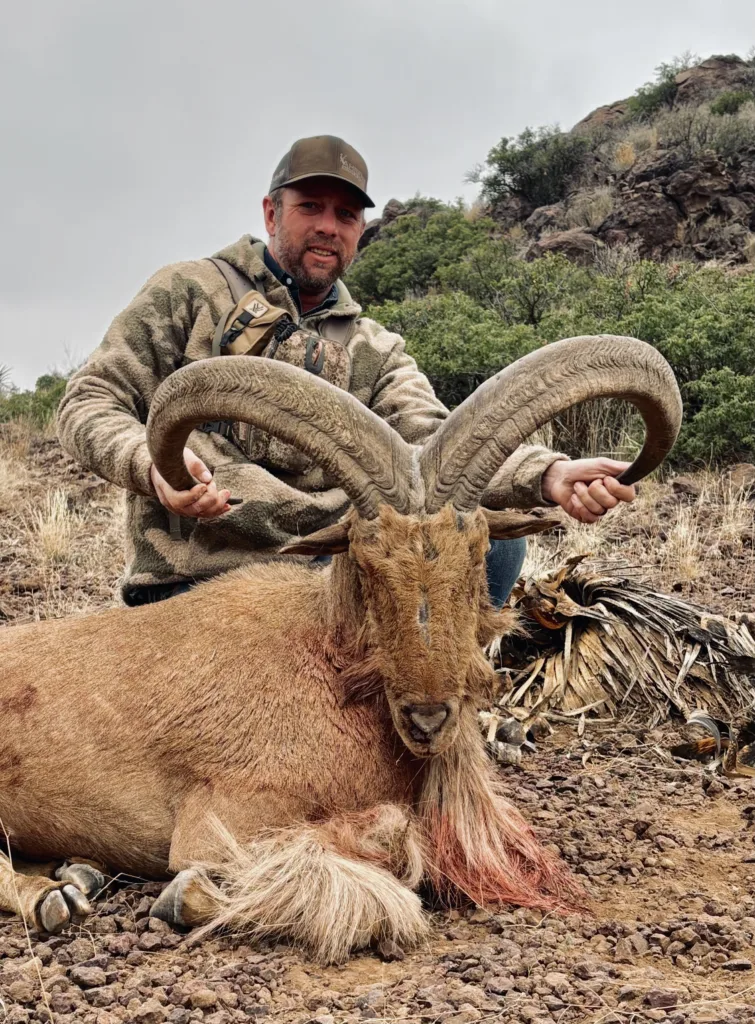
Across the state, we have seen over the last 20 years a huge increase of in state and out of state hunters in pursuit of free-range Aoudad in the Trans Pecos region of Texas. The allure of these hunts derives from the physicality of terrain, style of hunting, and overall experience of chasing these elusive creatures. Personally, I remember growing up in Alpine, Texas when landowners would let their Mule deer hunters shoot Aoudad on sight! Now, Aoudad help provide substantial monetary benefit to these same landowners, even in years of drought when livestock production numbers have been reduced. These hunts have increased in popularity to hunters across the United States due in part to the relatively cheaper price to hunt these “sheep” compared to the typical Desert Big Horn, Dall, or even Stone sheep hunts. Even in high fenced ranches, hunters are drawn to hunt Aoudad in large numbers in recent years. How these Aoudad get into the high fence markets is quite the procedure.
Aoudad Trapping and Relocations:
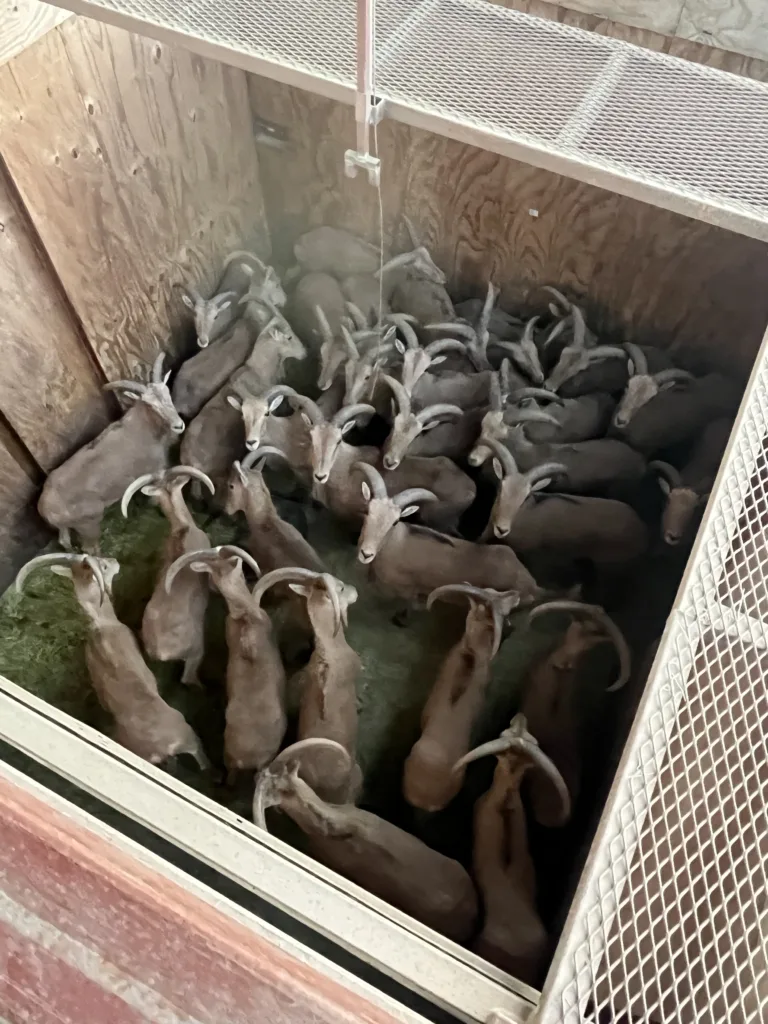
Across several ranches in west Texas, we trap yearly around 3,000 free ranging Aoudad and relocate to high fence ranches elsewhere in the state. Several benefits come from these efforts. One, we live capture and sell Aoudad off ranches in remote locations to provide additional income aside from hunting. This also helps alleviate grazing pressure on pastureland at the same time. Two, this effort allows us to stock Texas high fenced ranches with rams, ewes and yearlings to supply their operations to keep in pace with their hunting demands for these animals. This management strategy is most beneficial to the west Texas landowners who are selling and the high fence owners who are running their hunting operations. The methods used for these relocation efforts are typically remote cellular wall traps where we feed these traps and live load large numbers of Aoudad and ship them out with trailers to our holding facility in Kerrville, Texas. The other method we commonly use is helicopter net gunning. This method is more commonly used when we are selectively targeting certain rams to sell to prospective high fence ranches. This method allows us to capture a specific number of rams off the property within the size we are looking for.

Aoudad Depredation & TPWD
A method that is also used, although I do not agree with personally, is shooting of these Aoudad from a helicopter. This method helps reduce numbers quickly from a landscape, but it also does not allow landowners to obtain any monetary benefit from this action. Texas Parks & Wildlife is the biggest proponent on this endeavor with one example coming from the Chinati State Park in Presidio County where they successfully shot an estimated 5,000 Aoudad from the air in the summer of 2024. Some depredation is necessary in certain areas of west Texas where trapping may not be as advantageous. However, if pairing the depredation of ewes and younger rams along with helicopter capturing of mature rams, this would yield to be the best value for both endeavors to manage this species.
In Closing
While the Aoudad species is a huge monetary benefit to several landowners across the state and particularly in far west Texas, we must maintain operations to manage these animals so that they do not get “out of hand”, just as we would any other resource. The outlook for overall hunter interest to come hunt in Texas remains at an all-time high, as does the reproductive efforts of Aoudad sheep.