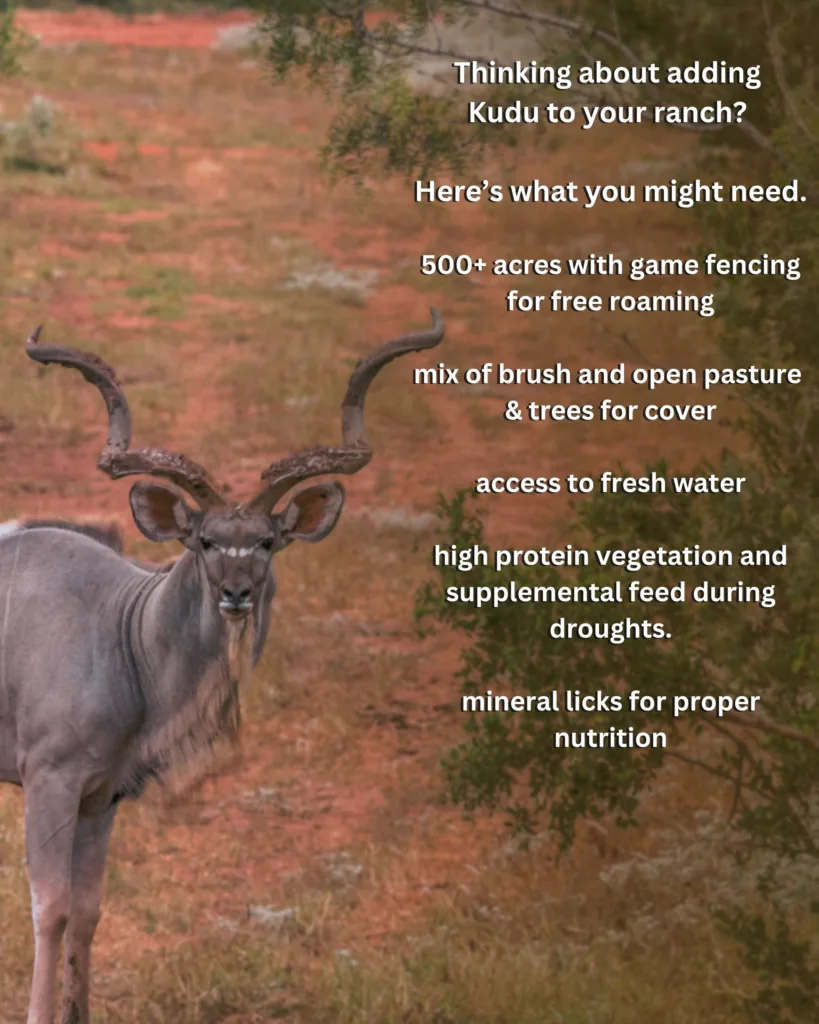
Native to the savannas of sub-Saharan Africa, the Kudu (Tragelaphus strepsiceros) is a large, majestic antelope known for its spiraled horns and striking tan coat adorned with vertical white stripes. Males can sport impressive horns that grow up to 5 feet long and are capable of leaping high fences when startled, showcasing their agility and grace. They thrive in areas where dense brush and open grasslands meet, allowing them to graze freely while using the cover for protection.

The Introduction of Kudu to Texas: A New Home
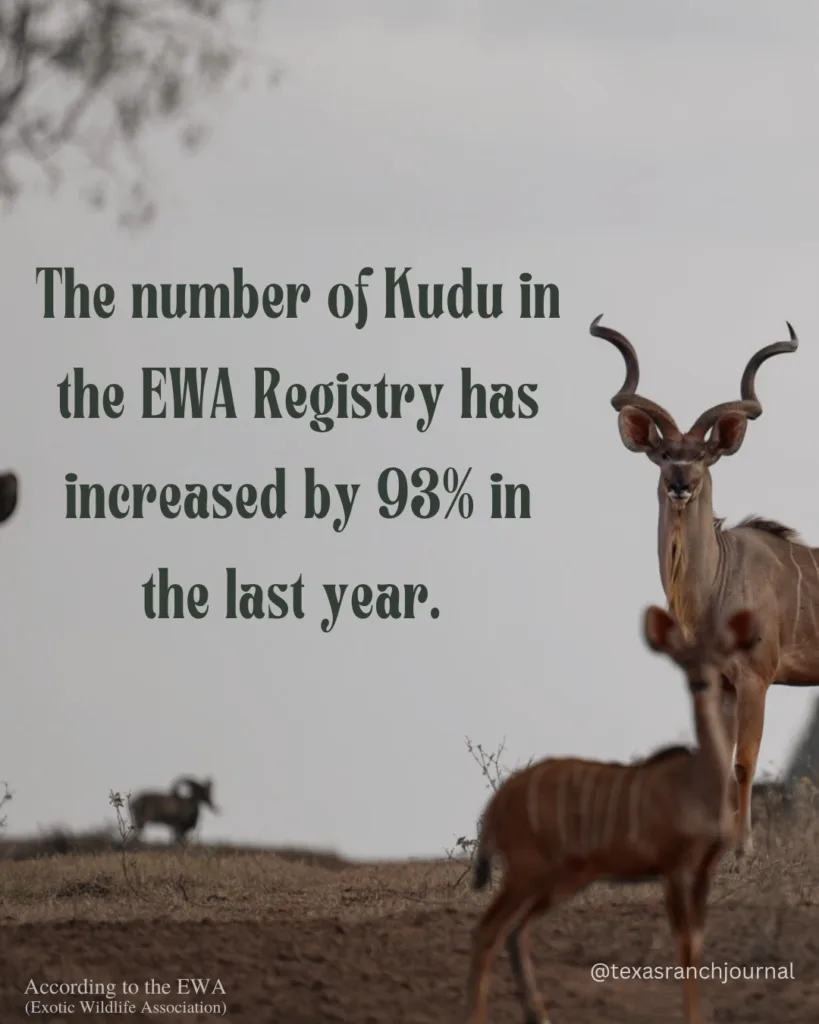
In the 1950s and 1960s, Kudu were first imported to the U.S. Texas quickly became one of the prime locations for their introduction. The state’s mild climate and the similarity of its terrain to their native Africa made it an ideal environment for these African antelopes to adapt and thrive. Texas ranches, seeking to diversify their wildlife offerings and create unique hunting opportunities, provided the perfect home. Kudu are able to roam within large, fenced areas, free from natural predators.
Conservation Efforts for Kudu in Africa
Though Kudu have faced threats in Africa, including poaching and habitat loss, they are not considered endangered. Conservation efforts in their native habitats focus on habitat protection, reducing human-wildlife conflict, and combating poaching. All of which are crucial for ensuring the species’ long-term survival. With these ongoing efforts, Kudu populations in Africa remain stable, though the pressures on their environment are ever-present.
How Managed Ranches in Texas Help Preserve Kudu
In Texas, managing Kudu on ranches has provided them with a safe haven, allowing their population to flourish while contributing to the preservation of their genetic diversity. The growing Kudu populations on these managed ranches also serve as a safeguard against the environmental pressures they face in the wild. Offering opportunities for regulated hunting helps fund continued conservation efforts.
Reinforcing Wild Populations
Occasionally, Kudu are exported back to Africa as part of relocation programs. This is aimed at reinforcing wild populations and maintaining genetic diversity. While these efforts are limited, they play an important role in supporting Kudu conservation on a global scale.
Understanding the Kudu’s role in Texas and Africa underscores the importance of sustainable wildlife management and global conservation efforts.
Learn more about the Exotic Wildlife Association at myewa.org
CLICK HERE to subscribe to Texas Ranch Journal!