Antler Rattling 101
By: Dr. Mickey W. Hellickson
Originally published in Quality Whitetails. Republished with permission. Edited to fit.
I caught movement out of the left corner of my eye just as I pulled the shed antlers apart from each other. I slowly turned for a better look, but whatever it was that had made the movement was no longer visible. I sat motionless, intently staring toward where I had seen the movement. With nothing in sight, I softly blew the grunt tube around my neck. At the sound of the grunt the buck finally made himself visible by jerking his head up in attention.
The buck, a mature nine point with tall tines and exceptionally heavy main beams, began trotting in my direction. He quickly moved to within 30 yards and then stopped and looked to his left. I looked that direction as well and noticed a second buck also responding to my earlier rattling segment. This buck, an eight point which appeared to be middle-aged, froze in his tracks when he noticed the first buck.
The two bucks then began side-stepping toward each other with hair on end to magnify their size. When neither buck backed down from this initial encounter, each buck laid his ears back. The bucks continued to side-step in half circles in front of each other, each with head lowered and antlers extended. The larger buck finally called the smaller buck’s bluff and charged toward him. The smaller buck stood his ground for a few seconds as the two bucks locked antlers. Quickly though, the larger buck proved his dominance and the smaller buck broke free running back toward the direction where he was first sighted.
As if this was not enough excitement, a total of five additional bucks responded to my next two rattling segments over the next 20 minutes. At one point there were three bucks within 25 yards of my makeshift blind under a mesquite tree. One of these bucks walked by at an eye-opening distance of only five yards!
Although two of the bucks were undoubtedly mature and were well within even bow range, I was not hunting. Instead, I was conducting preliminary research toward a doctorate degree at The University of Georgia.
The core of my research involved an intensive three-year telemetry study on movement patterns and behavior of different-aged bucks. In addition to this research, I initiated a second study on antler rattling. With the help of several college student interns, we conducted nearly all of the rattling research on weekends during our time off. I was especially interested in the rattling research because bucks that respond to rattling offer a unique view to their breeding behavior. Of course, I was also interested in the rattling research because I love to hunt whitetails.
My first question was “what type of rattling sequence attracts the highest number of bucks?” Because no research had ever been conducted on antler rattling, I relied on rattling articles I had read in hunting magazines to develop four different rattling sequences. Volume and length of the rattling were varied between each of the four sequences.
I conducted the rattling research at the Rob and Bessie Welder Wildlife Foundation Refuge, north of Sinton, Texas. This refuge was chosen as the study area for several reasons. The deer herd is relatively high, the buck to doe ratio is fairly even, and the age structure in the buck segment of the herd is well balanced. In addition, because the study site was a refuge, none of the bucks had been previously exposed to antler rattling. Also, 17 30-foot tall observation towers are located throughout the refuge. These towers offered ideal stands for observing and videotaping bucks as they responded to our rattling.
The four rattling sequences were randomly tested during the pre-rut, rut peak, and post-rut over a three-year period. Each sequence began with a 10-minute segment that included one or three minutes of actual rattling followed by nine or seven minutes of silence. This was then repeated two more times over the next 20 minutes.
The four sequences were called “short and quiet” (SQ), “short and loud” (SL), “long and quiet” (LQ), and “long and loud” (LL). Both short sequences included three 10-minute segments with each containing one minute of rattling followed by nine minutes of silence (total of three minutes of rattling over the 30-minute period). Both long sequences also included three 10-minute segments, but each segment now included three minutes of rattling followed by seven minutes of silence (nine minutes of rattling over the 30-minute period).
During the two “quiet” sequences, both elbows were held against the body to avoid loud antler clashes. During both “loud” sequences, the antlers were clashed together as loudly as possible. We also broke nearby branches, rubbed bark, and scrapped the ground trying to make as much “natural” noise as possible.
Each rattling sequence was tested at one of the 17 observation stands and included two people. One person watched deer respond to the rattling from the top of the stand, recorded data, and videotaped each buck with a camcorder. The second person performed the rattling upwind of the stand in the nearest clump of brush. Both people were completely camouflaged and remained as quiet and still as possible when not rattling.

Whenever a buck responded to the rattling, we estimated its age and gross Boone and Crockett Club score “on-the-hoof.” The interns and I watched videos of known-age bucks to prepare ourselves for estimating ages and scores. Because each buck response was also videotaped, we were able to review the video of each buck during the evenings to arrive at a consensus of the buck’s age and gross Boone and Crockett Club score. We also recorded the time and direction from the stand where each buck was first sighted. Lastly, at each stand we estimated wind speed and direction, temperature, and the amount of cloud cover.
By the conclusion of the study, we had rattled 171 different times with 60 sequences performed during pre-rut, 60 during rut peak, and 51 during post-rut. The periods of the rut were determined based on necropsy records of over 900 does killed on the refuge. A total of 111 bucks responded to our rattling.
The two loud sequences (SL & LL) were performed 85 times and attracted 81 bucks, nearly three times as many bucks as the two quiet sequences (SQ & LQ) which were performed 86 times and attracted only 30 bucks. The response rates were 95% for the loud sequences and 35% for the quiet sequences.
Clearly then, as the volume of the rattling is increased the number of bucks that respond also increases. Obviously, more bucks were able to hear the louder rattling because the sound no doubt carried further. However, bucks also responded quicker and more aggressively to the loud sequences. On several different occasions we had bucks run to within a few yards of the person rattling.
There was no difference between the response rates of the four sequences when they were combined according to the length of the rattling. The short sequences (SQ & SL) attracted an equal ratio of bucks when compared to the long sequences (LQ & LL). The short sequences were performed 88 times and attracted 57 bucks. The long sequences were performed 83 times and attracted 54 bucks.
However, when the data were grouped according to the timing of the rut there were some differences based on rattling length. During the pre-rut, the LL sequence attracted the highest ratio of bucks. During the rut peak, the SL sequence attracted the highest ratio of bucks. And during post-rut, the LQ sequence attracted the highest ratio of bucks.
The majority of bucks responded to the rattling during the first 10 minute segment with the lowest response rates during the third segment. However, the differences between response rates by segment were not great. Forty-nine bucks (44%) responded during the first segment, 37 bucks (34%) responded during the second segment, and 25 bucks (22%) did not respond until the third segment. Obviously therefore, from a hunting standpoint it is important to remain in the same rattling location for at least 30 minutes if you are interested in seeing a majority of the bucks that will respond to the rattling.
When I grouped the responses based on the timing of the rut, I found that the majority of bucks responded during the rut peak. Lowest response rates occurred during pre-rut. During the rut peak, 65 bucks responded to 60 different sequences for a response rate of 108%. During post-rut, 28 bucks responded to 51 sequences for a response rate of 55%. And during pre-rut. only 18 bucks responded to 60 sequences for a response rate of 30%.
Far and away the best time to rattle is during the rut peak – if you are interested in rattling in high numbers of bucks. Often when rattling during the rut peak more than one buck will respond at a time. On two occasions, during this magic time of the year, we had eight different bucks respond during one 30-minute sequence.
Although rattling during the rut peak can be very exciting, the majority of bucks that respond are young and middle-aged. A few mature bucks will respond, but the overall response rate for these mature bucks is lower than during either pre-rut or post-rut. More than likely this is due to the fact that the majority of the mature bucks are too busy tending, chasing, or trying to locate receptive females to respond to the rattling.
The highest response from mature bucks occurred during the post-rut when an equal number of middle-aged and mature bucks responded to our rattling. During the post rut, most of the young bucks, and many of the middle-aged bucks had returned to bachelor groups, so their response rates declined. Mature bucks however, tended to still be alone and in search of receptive females. Although mature bucks were still actively seeking does, most does had already been bred by this time. This meant there were a lot fewer “hot” does during the post-rut to keep the mature bucks occupied. Because mature bucks were still actively engaged in breeding behavior, and because fewer does were “in heat,” the response rates from mature bucks were highest during the post rut.
The second highest response rates for mature bucks occurred during the pre rut. During the pre rut, most of the bucks were in bachelor groups. Interestingly, we observed that when bucks were in bachelor groups, typically only one buck from the group would respond to our rattling. Although all of the bucks in the group could obviously hear the rattling, the buck that responded often appeared to be the dominant buck within the group. We suspect that the dominant buck intimidated the other subordinate bucks in the group, which kept them from responding to the rattling. Trophy hunters, who are willing to sit and rattle for long periods without seeing many deer, may want to try rattling at this time because of the increased likelihood that a mature buck will respond.
The highest number of bucks responded during morning rattling sequences. Sixty of the 111 bucks that responded came in during the 64 sequences performed between 7:30 a.m. and 10:30 a.m. Thirty-three bucks responded during the 62 sequences performed in the afternoon. Only 18 bucks responded during the 45 sequences performed during midday. This finding was not surprising because deer are naturally most active at sunrise and sunset anyway.
When we looked at this same data according to the timing of the rut we found that during pre-rut the vast majority of bucks (83%) responded during morning sequences. During both rut peak and post-rut a more equal number of bucks responded during morning and afternoon sequences.
As mentioned earlier, we also recorded various weather conditions each time we rattled. Not surprisingly, the highest number of bucks responded when wind speeds were lowest. As wind speeds increased, the number of bucks responding decreased. Obviously, as wind speed increased, fewer bucks were able to hear the rattling.
Sixty-seven of the 111 bucks (60%) that responded to our rattling were first sighted downwind of our stand. Bucks were obviously using the wind to determine what was producing the rattling sound. Surprisingly however, mature bucks were no more likely to approach from downwind then were young or middle-aged bucks. Bucks that were seen upwind of the stand before the rattling began typically circled, from their initial location to a location downwind, as they approached the stand. However, several bucks did approach our stand from upwind.
The highest number of bucks responded when cloud cover was 75%. Lowest responses occurred when there were no clouds. Also, the highest number of bucks responded to our rattling when temperatures were between 70 and 80 degrees. As temperatures increased, the number of bucks responding to our rattling decreased, reaching a low point at temperatures over 90 degrees.
In summary, without a doubt loud rattling attracts more bucks than quiet rattling. Hunters shouldn’t hesitate to slam the antlers together as loudly as possible. It is also important to make as much additional “natural” noise as possible by breaking branches and kicking dirt and brush when rattling. If you are not totally exhausted after completing the sequence than you probably did not rattle loud enough. Also, if you have ever been fortunate enough to observe a true, knockdown-dragout fight between two equally matched mature bucks, then you know that it is almost impossible to make too much noise.
Although we never observed any bucks being frightened away by our rattling, I would recommend that the first sequence be conducted quietly to avoid any possibility of spooking a buck that may already be close to your position. The follow-up sequences should then be conducted as loudly as possible to maximize the distance the sound travels in order to maximize the number of bucks that are able to hear the rattling.
During the silent periods between rattling we often used a grunt call to bring bucks in even closer or to temporarily stop bucks from moving. During silent periods we also simulated a buck making a rub by rubbing the shed antlers on nearby tree trunks and branches. We often had bucks lingering in the area after their initial response. These bucks many times would start making rubs themselves in response to our simulated rubbing.
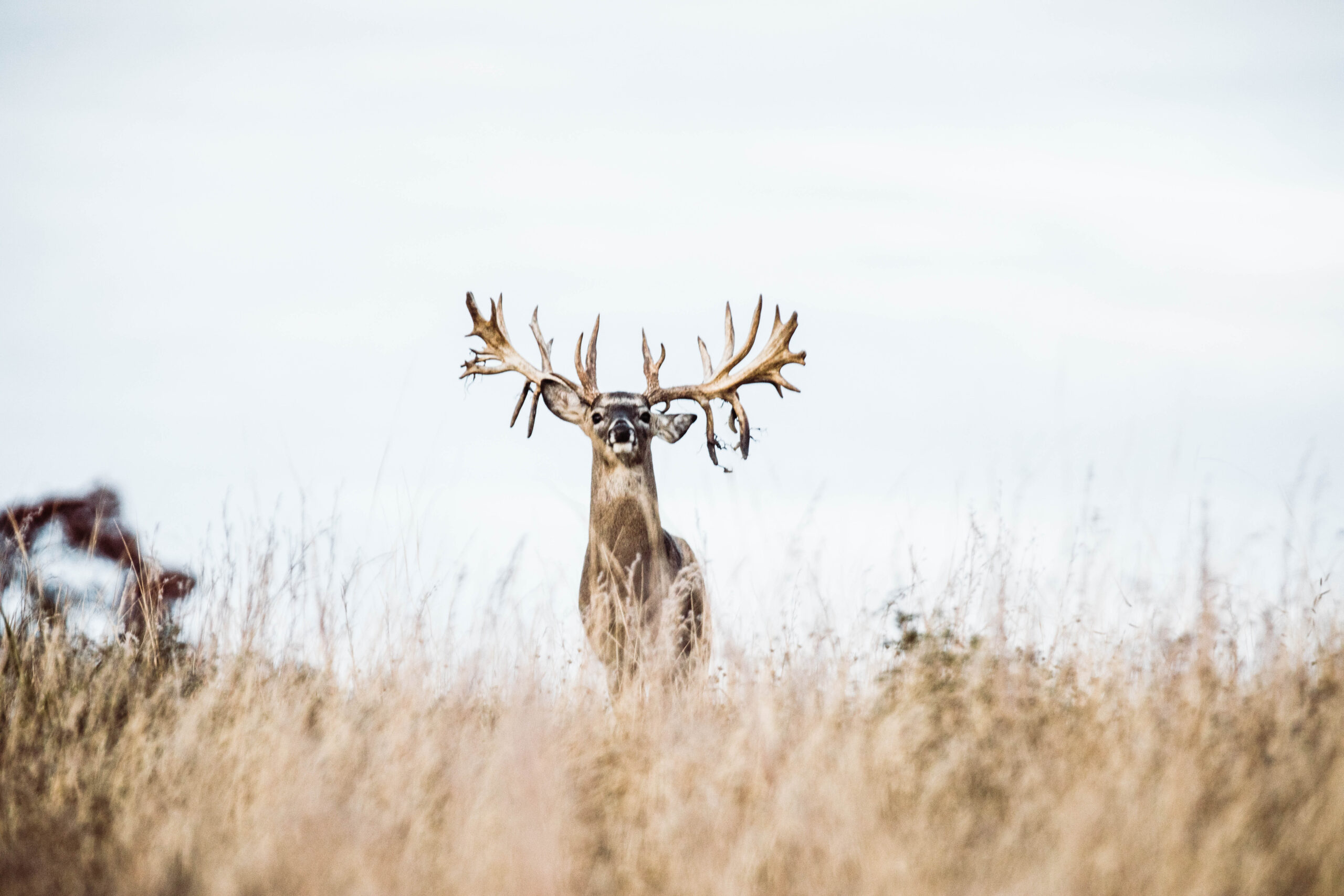
The length of the rattling does not seem to be important. However, I would not rattle any longer than 2-3 minutes at a time to minimize the chance of a buck spotting you while you are slamming the antlers together. And I would remain in the same location for at least 30 minutes to see any bucks that may be responding late.
Rattling during the rut peak is best for seeing high numbers of bucks, but the pre-rut and post-rut are better times to rattle in mature, trophy bucks. Although rattling can be productive during all hours of the day, mornings and afternoons are best. Buck responses increase as wind speed and temperature decrease and as cloud cover increases.
Bucks typically approach from downwind so select stand sites where you have a clear view downwind. However, don’t forget to keep an eye upwind as well. Also, rattle with a partner whenever possible so that one person can get elevated and search for deer while the other person rattles. In our study, the person rattling at ground level did not see 63 of the 111 bucks that responded. If you are rattling alone I would still get elevated even though this increases the chances of bucks spotting you while you are rattling. Lastly, I am sure that imitation antlers will attract bucks but I prefer to use the largest fresh set of shed antlers I can find.
SIDEBAR
In an upcoming issue of Texas Ranch Journal I will reveal the results of a second antler rattling study that was conducted on a private ranch where I had placed radio transmitting collars on 130 different bucks. These bucks ranged in age from 1.5 to 11.5, with an average age of over four years. Several of these bucks had special, unique radio transmitters attached to their collars. These new transmitters allowed us to determine whether the buck was active or bedded each time that we used telemetry to locate the buck. Just by listening to the signal that we received from the buck’s radio transmitter we were able to tell whether that buck was up and moving around or if he was bedded.
During this second rattling study we initially located each buck using telemetry. We then carefully and quietly approached these bucks from downwind until we felt we were within 200-300 yards. We then performed the LL rattling sequence with the telemetry equipment left turned on. This allowed us to determine if the buck became active in response to our rattling even when we were not able to see the buck.
In an upcoming issue we will describe the individual response patterns of these bucks in relation to their age and gross Boone and Crockett Club score.
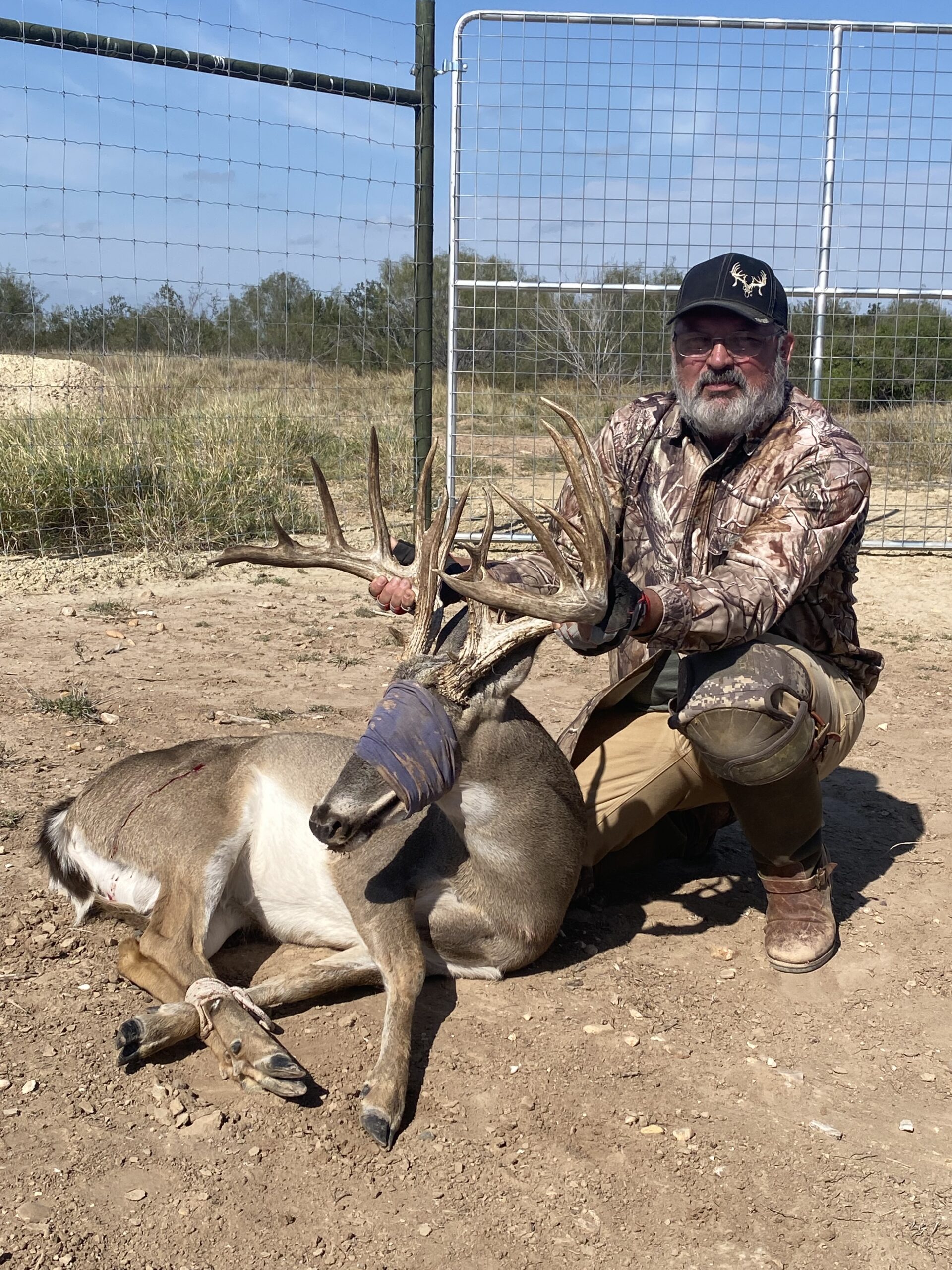
Dr. Mickey W. Hellickson, CWB
Orion Wildlife Management Services
P.O. Box 260130
Corpus Christi, TX 78426
Mobile: (361) 960-9598
Email: mickey.hellickson@yahoo.com