Facing the Threat: CWD’s Impact on Texas Deer Industry
As of March 2024, Chronic Wasting Disease (CWD) has spread to 32 states, four Canadian provinces, Norway, Finland, Sweden, and even South Korea (*CDC). First identified in 1967 in a captive deer in Colorado, CWD is a fatal neurological illness affecting cervids such as white-tailed deer, mule deer, elk, reindeer, and moose. It is caused by prions—abnormal proteins that accumulate in the central nervous and lymphatic systems, leading to degenerative neurological symptoms and eventual, wasting death.
The deer breeding industry, which saw significant growth over recent decades, is now facing a downturn due to CWD concerns. The Texas Deer Association and Texas Trophy Hunters Association showcased this growth, but from September 2021 to September 2023, Texas witnessed a 30% decline in deer breeders. This decline is largely attributed to the risk of depopulation mandated by Texas Parks and Wildlife if CWD is detected in any facility.

Financial impacts are substantial, with reduced revenues from breeding operations and sales of deer, prized for both hunting and breeding. This downturn has affected individual breeding facilities and local economies, leading to fewer positions available in operations directly related to deer breeding. Fortunately, a recent legislative bill has shifted the financial burden of depopulation to the state, providing some relief to breeders who are impacted.
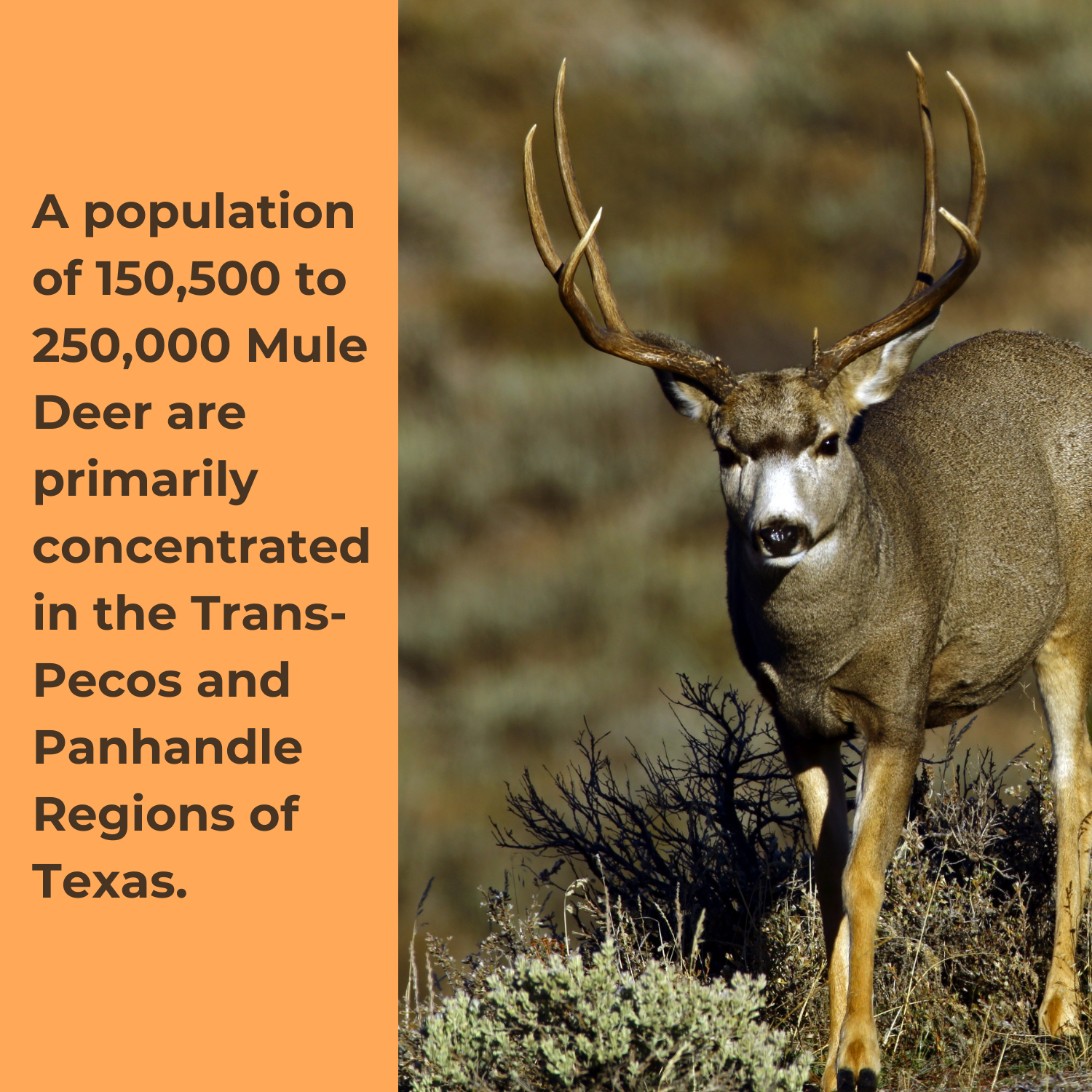
Beyond economics, deer play a crucial ecological and cultural role in Texas. They influence biodiversity through grazing patterns that shape vegetation dynamics and provide habitat for wildlife. CWD threatens this balance by potentially reducing deer populations and altering habitat management practices.
Deer hunting alone contributes an estimated $1.2 billion annually to Texas’s economy, according to Texas Parks and Wildlife Department (TPWD). However, some studies suggest this economic impact could be as high as $9.6 billion (Texas A&M). This substantial contribution underscores the economic importance of the deer breeding industry in Texas.
The spread of CWD is closely linked to deer breeding ranches, where confined environments facilitate disease transmission. The RW Trophy Ranch experienced Texas’s most severe CWD outbreak, which was ended in 2022 by the depopulation of its entire deer population. The owner, Mr. Robin Williams, had been in the deer breeding business for 40+ years proving that even veteran breeders struggle to prevent or manage CWD.

Deer breeding facilities play a pivotal role in advancing our understanding of Chronic Wasting Disease (CWD). These controlled environments provide ideal conditions for conducting rigorous research that is otherwise challenging in the wild. By studying deer in breeding facilities, scientists can closely monitor disease transmission dynamics, genetic factors influencing susceptibility, and evaluate potential interventions.
To effectively combat Chronic Wasting Disease (CWD), breeders adhere to stringent state and federal regulations enforced by agencies such as the Texas Parks and Wildlife Department (TPWD) and the United States Department of Agriculture (USDA). These regulations include fencing requirements to prevent contact between farmed and wild deer populations, meticulous inventory controls to track deer movements, mandatory testing prior to transferring deer to another location, and mandatory testing of harvested deer within designated CWD zones. These protocols are essential for containing the disease and preventing its spread to unaffected areas.
Management strategies to combat CWD will shape the future of deer breeding in Texas. Adaptive practices, ongoing research, and shifts in industry policies are crucial for navigating long-term impacts. Innovations in disease surveillance, genetic testing, and herd management offer potential solutions but require sustained investment and collaboration.
While CWD poses significant challenges to Texas’s deer breeding industry, ongoing collaboration between breeders and regulatory agencies is vital. Mandatory testing and research efforts aim to better understand and manage CWD, ensuring the sustainability of deer populations and the industries they support.
Sources:
TPWD
Aphis USDA
NVAP Reference Guide: Chronic Wasting Disease (Control and Eradication)
NWRC Spotlight: Accomplishments in Chronic Wasting Disease Research
Angelo Jr., E., & McFarlane, R. (2024, June 6). Wasting disease is serious threat to deer. Let’s back Texas’ effort to deal with it. Star-Telegram. Retrieved from https://www.star-telegram.com/opinion/opn-columns-blogs/other-voices/article289051069.html
Emily Brindley (2024, May 31). State kills hundreds of deer at North Texas ranch, after years of legal fights. Star-Telegram. Retrieved from https://www.star-telegram.com/news/state/texas/article288479815.html#storylink=cpy
Dac Collins (2023, Feb 9). In the War Against CWD, Deer Breeders in Texas Are Being Cast as Both the Enemy and the Answer. Outdoor Life. Retrieved from
https://www.outdoorlife.com/conservation/texas-deer-breeders-cwd/
Jessica Domel (2023, Sept 7). Chronic wasting disease, regulations impact on Texas deer breeders. Texas Farm Bureau. Retrieved from
https://texasfarmbureau.org/chronic-wasting-disease-regulations-impact-texas-deer-breeders/
Texas Legislature. “Senate Bill 1372.” Available at: https://capitol.texas.gov/tlodocs/88R/billtext/html/SB01372I.html